Check your BMI, Daily Calories, BMR & Body Fat in seconds.
The Power of Mindfulness for Mental Health: A Practical Guide to Finding Calm in a Busy World
In a world that rarely slows down, mental health has become one of the most urgent conversations of our time. Constant notifications, overflowing schedules, and the pressure to always stay productive leave many people feeling drained, distracted, and emotionally depleted. Mindfulness for mental health offers a practical, evidence-based way to restore balance—without expensive tools, lengthy training, or hours of free time. At its core, mindfulness simply means paying attention to the present moment without judgment. It invites us to slow down, notice what is happening inside and around us, and respond with greater clarity instead of reacting on autopilot. This guide explains how mindfulness supports emotional well-being, why the science backs it, and how you can weave it into even the busiest daily routine.
Key Takeaways
- Mindfulness for mental health is an evidence-backed practice that reduces stress, improves emotional regulation, and sharpens focus through present-moment awareness.
- You do not need meditation experience—simple techniques like mindful breathing or a one-minute body check can be done anytime, anywhere.
- Scientific research links regular mindfulness practice to measurable changes in brain regions responsible for learning, memory, and emotional control.
- Consistency outweighs duration; practicing 5 to 10 minutes daily produces better long-term results than occasional hour-long sessions.
- Mindfulness complements professional mental health care but is not a substitute for treatment when symptoms become severe or persistent.
Quick Answer
Mindfulness for mental health is the intentional practice of focusing on the present moment without judgment. It helps calm the nervous system, reduce anxiety and stress, improve emotional regulation, and strengthen attention. Even 5 to 10 minutes of daily practice—through breathing exercises, body scans, or mindful walking—can produce noticeable improvements in mental well-being over several weeks of consistent effort.
What Is Mindfulness? A Clear Definition
Mindfulness is the ability to be fully present—aware of where you are and what you are doing—without becoming overly reactive or overwhelmed by what is happening around you. It is not about emptying the mind or achieving a state of perfect calm. Rather, it is about noticing.
When you practice mindfulness, you intentionally direct attention to:
- Your thoughts as they arise and pass
- Your emotional state in the current moment
- Physical sensations throughout your body
- Your immediate environment—sounds, sights, and smells
The goal is not to eliminate uncomfortable thoughts or feelings. Instead, mindfulness teaches you to observe them with curiosity rather than getting swept away. This shift—from reacting automatically to responding thoughtfully—lies at the heart of why mindfulness for mental health has gained widespread recognition among clinicians and researchers alike.
For many people, this awareness creates a powerful pause. In that pause, you gain the freedom to choose how to respond rather than being hijacked by stress, anger, or fear. Over time, that freedom reshapes your entire relationship with your own mind.
How Mindfulness for Mental Health Transforms Well-Being
The benefits of mindfulness extend far beyond temporary relaxation. When practiced consistently, mindfulness creates lasting changes in how the brain processes stress, emotions, and attention. Below are the most significant ways it supports mental health.
Calms the Stress Response
Stress often arises not from what is happening right now but from worrying about future scenarios or ruminating on past events. Mindfulness interrupts this cycle by grounding attention in the present moment—the only place where life actually unfolds.
Physiologically, mindfulness activates the parasympathetic nervous system, sometimes called the “rest and digest” response. This lowers cortisol levels, slows heart rate, and reduces muscle tension. People who practice regularly often notice they recover from stressful events more quickly and feel less chronically on edge.
Strengthens Emotional Awareness
Emotions can feel overwhelming, especially during difficult periods. Mindfulness helps create space between an emotional trigger and your reaction to it. Instead of immediately lashing out, withdrawing, or spiraling into worry, you learn to recognize the emotion as a temporary experience—one that will pass.
This skill, known as emotional regulation, is one of the most researched benefits of mindfulness. Studies suggest that consistent practice strengthens the prefrontal cortex, the brain region responsible for reasoned decision-making, while reducing reactivity in the amygdala, the brain’s fear center.
Sharpens Attention and Focus
In an age of endless distractions, the ability to sustain attention has become increasingly rare—and increasingly valuable. Mindfulness trains the brain to return focus to a single anchor point, such as the breath, again and again. Each time you notice your mind wandering and gently bring it back, you strengthen the neural pathways associated with concentration.
Over time, this translates into improved focus during work, deeper engagement in conversations, and a greater capacity to be present with loved ones.
Cultivates Self-Compassion
Many people are far harsher with themselves than they would ever be with a friend. Mindfulness encourages a shift from self-criticism to self-observation—noticing difficult thoughts without piling on judgment. This gentle, curious approach helps break cycles of shame and negative self-talk that often accompany anxiety and depression.
Research indicates that self-compassion, developed through mindfulness, is strongly correlated with greater emotional resilience and lower rates of psychological distress.

The Research Behind Mindfulness and Brain Health
Mindfulness is not a passing wellness trend—it is grounded in decades of scientific research. Neuroimaging studies have identified several measurable changes in the brains of people who practice regularly.
Key findings include:
- Reduced amygdala activity: The brain’s threat-detection center becomes less reactive, helping lower baseline anxiety levels.
- Increased gray matter density: Areas linked to learning, memory, and perspective-taking show measurable growth.
- Strengthened prefrontal cortex function: The region responsible for planning, focus, and impulse control becomes more active and efficient.
- Improved connectivity: Communication between brain regions involved in self-awareness and emotional processing becomes more integrated.
These findings help explain why reputable institutions such as the National Institutes of Health and the Mayo Clinic recognize mindfulness as a valuable component of stress management and mental health care. Many therapists now integrate mindfulness techniques into cognitive behavioral therapy and other evidence-based treatment approaches.
The World Health Organization also emphasizes the importance of accessible self-care strategies for mental well-being, and mindfulness fits squarely within that framework—simple, low-cost, and available to nearly everyone.
5 Practical Mindfulness Exercises for Daily Life
You do not need a meditation cushion, a silent room, or a retreat in the mountains to practice mindfulness. The following exercises can be integrated into ordinary routines, often in just a few minutes.
1. Mindful Breathing
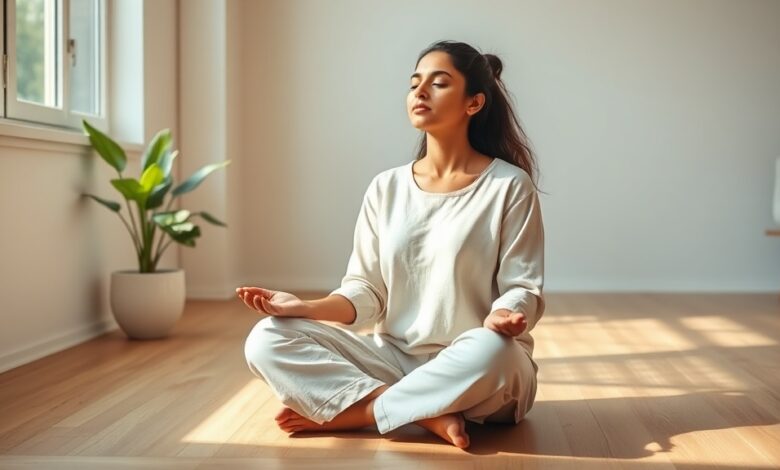
Mindful breathing is the foundation of most mindfulness practices—and one of the most accessible. It requires no special equipment and can be done anywhere.
- Sit comfortably with your back straight but not rigid.
- Close your eyes or lower your gaze.
- Bring attention to the natural rhythm of your breath.
- Notice the sensation of air entering and leaving your nostrils or the rise and fall of your chest.
- When your mind wanders—and it will—gently guide it back to the breath without frustration.
Even three to five minutes of this practice can noticeably calm the nervous system and create a sense of mental spaciousness.
2. Body Scan Meditation
A body scan helps you reconnect with physical sensations and identify areas where you may be holding tension without realizing it.
Lie down or sit comfortably. Slowly move your attention through your body, starting at the toes and working upward to the crown of the head. At each area—feet, calves, thighs, abdomen, chest, shoulders, neck, face—simply notice what you feel. Warmth, tingling, tightness, or nothing at all. There is no need to change anything. The practice is simply to observe.
Body scans are especially helpful before sleep or after a stressful day when tension has accumulated unnoticed.
3. Mindful Walking
Walking is something most people do every day, yet it is rarely done with full awareness. Mindful walking transforms a routine activity into a grounding practice.
During a short walk—even just five minutes—focus on the physical sensations: the feeling of your feet pressing against the ground, the rhythm of your stride, the movement of air against your skin, the sounds around you. When your mind drifts to planning or worrying, gently bring it back to the physical act of walking. For more on the mental health benefits of walking, see our article on why walking every day can change your life.
4. Mindful Eating
Many people eat while scrolling through phones, watching television, or rushing between tasks. Mindful eating invites a slower, richer relationship with food.
Choose one meal or snack each day to eat without distractions. Notice the colors, textures, and aromas before taking the first bite. Chew slowly and pay attention to flavors as they unfold. Tune in to your body’s signals of hunger and fullness. This practice not only deepens the sensory experience of eating but also supports healthier digestion and portion awareness.
5. The One-Minute Check-In
Not every moment allows for a formal practice. When time is tight, a one-minute check-in can reset your mental state.
Pause whatever you are doing. Take a slow breath and silently ask yourself three questions: What am I feeling right now? What thoughts are present? How does my body feel? There is no need to fix or analyze anything—simply notice. This brief pause can interrupt a spiral of stress and bring you back to the present moment in under 60 seconds.
Creating a Mindfulness Routine That Sticks
Like physical exercise, mindfulness produces the greatest benefits when practiced consistently. The following strategies can help you build a sustainable habit without feeling overwhelmed.
Begin With Microscopic Habits
Start with just three to five minutes a day. A short, manageable session is far easier to maintain than an ambitious 30-minute commitment that quickly feels burdensome. As the habit solidifies, you can naturally extend your practice time. For additional strategies on building mental health habits, read our guide on daily habits for better mental health.
Anchor Practice to Daily Triggers
Pair mindfulness with an existing routine. Practice mindful breathing right after brushing your teeth. Do a body scan before getting out of bed in the morning. Take three mindful breaths before opening your email. When mindfulness is attached to something you already do, it becomes automatic rather than optional.
Use Gentle Environmental Cues
Simple reminders can keep mindfulness on your radar throughout the day: a sticky note on your desk, a daily phone alarm, or a mindful pause whenever you sit down to eat. These cues act as gentle nudges rather than rigid obligations.
Let Go of the Perfection Trap
Your mind will wander. Some days will feel easier than others. That is not failure—it is the practice itself. Each time you notice distraction and return to the present moment, you are strengthening the skill. There is no such thing as a “bad” mindfulness session, only a human one.
Common Struggles When Starting Mindfulness for Mental Health
Beginners often encounter similar obstacles. Knowing what to expect can prevent frustration and help you stay consistent.
“My Mind Won’t Stop Racing”
This is the most common concern—and it is completely normal. The goal of mindfulness is not to silence thoughts but to change your relationship with them. Noticing a racing mind means you are already practicing awareness. Each time you gently redirect attention to the present, the practice is working exactly as intended.
“I Don’t Have Enough Time”
Mindfulness does not demand long sessions. A single mindful breath counts. Three slow breaths before answering an email, a brief body check while waiting for coffee to brew, a moment of awareness during a walk to the car—these micro-practices accumulate throughout the day and produce real benefits.
“I’m Not Seeing Immediate Results”
Mindfulness is more like strength training than a painkiller. Benefits build gradually and often become noticeable only after several weeks of regular practice. Many people first observe subtle shifts—feeling slightly less reactive, sleeping a little better, catching themselves before spiraling into worry—before experiencing larger changes in mood and resilience.
For practical stress-reduction techniques that pair well with mindfulness, explore 5 effective daily ways to reduce stress and improve your mental health.
When Mindfulness Alone Is Not Enough
Mindfulness is a powerful tool, but it is not a substitute for professional mental health care when symptoms become severe. If you experience persistent signs such as debilitating anxiety, prolonged depression, panic attacks, or difficulty carrying out daily responsibilities, it is essential to speak with a qualified mental health professional.
Mindfulness can still play a supportive role alongside therapy or medication, but a licensed clinician can provide the comprehensive evaluation and treatment plan that complex mental health conditions require. There is no conflict between practicing mindfulness and seeking professional help—the two often work best together.
Important: If you are experiencing thoughts of self-harm or suicide, please contact a crisis helpline immediately. In the United States, you can dial 988 to reach the Suicide & Crisis Lifeline, available 24 hours a day. You are not alone, and help is available.
| Practice | What It Involves | Typical Time | Primary Benefit |
|---|---|---|---|
| Mindful Breathing | Focusing attention on the natural rhythm of inhalation and exhalation | 3–10 minutes | Calms the nervous system; reduces acute stress |
| Body Scan | Systematically directing awareness through each area of the body | 5–20 minutes | Releases physical tension; improves body awareness |
| Mindful Walking | Walking slowly while attending to physical sensations and surroundings | 5–15 minutes | Grounds attention; combines movement with awareness |
| Mindful Eating | Eating without distractions while noticing flavors, textures, and fullness cues | Duration of one meal or snack | Improves digestion; encourages healthier eating patterns |
| One-Minute Check-In | Pausing to notice current thoughts, emotions, and bodily sensations | 1 minute | Resets mental state; interrupts stress spirals quickly |
Bringing mindfulness into your daily life does not require perfection—only a willingness to pause and pay attention. In a culture that constantly demands more speed, more productivity, and more stimulation, choosing to slow down, even for a few minutes, is a quiet act of self-care with profound implications.
The beauty of mindfulness for mental health lies in its simplicity. You do not need to silence your thoughts, master a complex technique, or dedicate hours each day. You only need to show up—again and again—with gentle curiosity toward your own experience. Each moment of awareness, no matter how brief, is a step toward greater emotional balance, clearer thinking, and a deeper sense of calm in the midst of a busy world.
Start where you are. Take a breath. Notice what is here, right now. The present moment is always available—and it is often far more peaceful than the stories the mind creates about it.

Frequently Asked Questions
How long does it take for mindfulness to improve mental health?
Some people notice a sense of calm after a single session, but lasting improvements in mood, focus, and emotional regulation typically emerge after several weeks of consistent daily practice. Like physical exercise, mindfulness builds cumulative benefits over time rather than producing instant transformation.
Can mindfulness for mental health help with anxiety disorders?
Yes, research indicates that regular mindfulness practice can significantly reduce symptoms of generalized anxiety and stress-related conditions by calming the nervous system and improving emotional regulation. However, individuals with diagnosed anxiety disorders should use mindfulness as a complement to professional treatment, not a replacement.
Do I need to meditate to practice mindfulness?
No. Meditation is one pathway to mindfulness, but it is not the only one. You can practice mindfulness during everyday activities such as walking, eating, showering, or even washing dishes. Any activity done with full present-moment awareness becomes a mindfulness practice.
This article is for educational purposes only and does not replace professional medical advice. Always consult a qualified healthcare professional regarding your health concerns.