
Check your BMI, Daily Calories, BMR & Body Fat in seconds.
Cristiano Ronaldo Workout Routine: What Everyday Exercisers Can Realistically Borrow
Cristiano Ronaldo’s physical conditioning at 40 is one of the most studied phenomena in modern sport. The Cristiano Ronaldo workout routine blends technical soccer drills, structured strength training, sprint work, and meticulously managed recovery into a system that has extended his elite career far beyond typical expectations. Understanding how it actually works—and which pieces are worth adopting—can meaningfully improve almost any training plan.
Key Takeaways
- Ronaldo’s results come from progressive overload, structured variety, and elite recovery support—not simply how much he trains.
- Attempting his two-a-day schedule without professional support typically leads to fatigue, overuse injuries, and stalled progress.
- The most transferable elements are purposeful strength training, consistent mobility work, movement variety, and prioritized recovery.
- A realistic adaptation means 3–4 training days per week with balanced strength, cardio, mobility, and deliberate rest built in.
- Recovery—quality sleep, sound nutrition, and active rest—is where adaptation actually happens, not an optional afterthought.
Quick Answer
The Cristiano Ronaldo workout routine combines sport-specific drills, sprint and agility work, structured strength training, and systematic recovery. His two-a-day schedule is unsustainable for most people, but its core principles—movement variety, progressive strength work, mobility, and prioritized rest—translate well into a 3–4 day weekly plan that any dedicated exerciser can follow.
What the Cristiano Ronaldo Workout Routine Actually Involves
Ronaldo’s training is not a random collection of intense sessions. It is a precisely engineered weekly system refined over two decades of professional play.
A typical week rotates through several distinct categories. On-field work covers technical soccer drills—passing, dribbling, and finishing—alongside sprint intervals and high-tempo team sessions. Gym sessions target specific muscle groups with clear intention: dedicated lower-body days, core stability work, upper-body training across chest, back, shoulders, and arms, plus full-body circuits that maintain overall conditioning.
Recovery receives equal structural weight. Mobility routines, stretching sessions, pool-based active recovery, and low-intensity movement like walking appear consistently throughout the week. These are not afterthoughts—they are programmed components with dedicated time slots.
Jared Meacham, PhD, RD, CSCS, a registered dietitian and certified strength and conditioning specialist, explains it clearly: “Ronaldo’s training schedule is based on many consecutive years of progressive training that is aligned with expert coaching methods and ongoing medical testing, feedback, and support in addition to world-class nutrition planning and recovery resources.”
The surface appearance of constant training conceals something more sophisticated: a carefully managed progression designed to maximize adaptation while controlling breakdown. That distinction matters enormously when deciding what to borrow.
Why Copying His Schedule Directly Backfires
The instinct to match volume is understandable. More work equals more results—except that equation only holds when recovery infrastructure keeps pace.
Dr. Meacham cautions that what looks like relentless effort is “actually a carefully managed process so that this athlete can adapt in every beneficial way without injury or programming breaking down.” Remove the medical monitoring, nutritional precision, and dedicated support staff, and the same workload that builds an elite athlete can systematically break down a recreational exerciser.
Fatigue accumulates faster than most people expect. Joints, tendons, and the central nervous system all require adequate time to rebuild between sessions. Without that recovery infrastructure, two-a-day training at high intensity leads to overuse injuries, hormonal disruption, and performance regression—not improvement.
The smarter path is understanding the principles behind his success and applying them at a scale the body can genuinely handle.
Core Principles Worth Borrowing from the Cristiano Ronaldo Workout Routine
Dr. Meacham identifies the most useful structural lesson plainly: “Beginners using Ronaldo’s workout structure as a baseline are going to benefit most from the routine’s comprehensive mix of technical practice drilling sessions, which are always accompanied by appropriate levels of strength training, mobility work, and prioritized periods of rest and recovery.”
Three principles stand out as broadly applicable to almost any exerciser.
Strength Training Designed for Functional Performance
Ronaldo’s gym work is not cosmetic. It supports athletic output—power, movement efficiency, and resilience against injury. That same goal applies to everyday exercisers.
Compound movements—squats, deadlifts, rows, and presses—build full-body strength that carries over into daily life and long-term health. Consistent resistance training supports bone density, metabolic function, joint stability, and lean muscle mass. Training for how the body moves, rather than only how it looks, produces more durable and lasting results.
Mobility Work as a Scheduled Priority
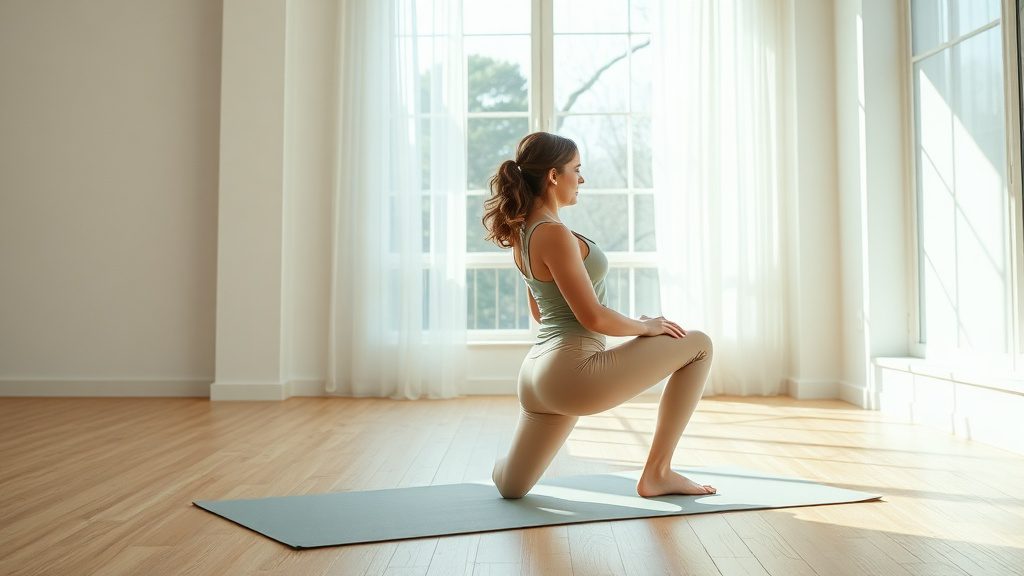
Ronaldo’s schedule dedicates specific time to joint mobility and dynamic flexibility work—not as a brief warm-up formality, but as a standalone training component. Hip mobility drills, dynamic stretching patterns, and movement preparation feature regularly in his weekly programming.
Even 10 to 15 minutes of focused mobility training several times per week improves range of motion, reduces chronic stiffness, and lowers the risk of common overuse injuries. It is one of the highest-return habits available to any exerciser, and one of the most frequently skipped.
Recovery Treated as Training, Not Downtime
This is arguably the most transformative mindset shift in the Cristiano Ronaldo workout routine. Recovery is not passive waiting between workouts—it is when muscles repair, the nervous system resets, and the body actually becomes stronger.
As Dr. Meacham emphasizes, “Daily, thoughtful recovery habits are often overlooked, but are an essential component for every exerciser who wants to see progressive positive results from their workouts.”
A Realistic Weekly Plan Inspired by Ronaldo’s Approach
The most practical way to apply Ronaldo’s philosophy is to distill it into a 3–4 day structure built around movement variety. Dr. Meacham advises focusing on “movement variety as a primary goal with intensity being secondary”—a principle that protects beginners from overreaching while building a genuine foundation.
Here is a sustainable weekly framework that reflects those priorities.
Day 1 — Lower Body Strength and Core Stability
Spend 30 to 45 minutes on compound lower-body work: goblet squats, Romanian deadlifts, glute bridges, and plank variations. These movements build strength across the hips, legs, and trunk simultaneously. Follow with 10 to 15 minutes of hip mobility—circles, deep squat holds, and hamstring lengthening work. This combination addresses both strength and the movement quality needed to perform it safely.
Day 2 — Upper Body Strength and Light Cardio
Dedicate roughly 30 minutes to upper-body compound lifts: push-up variations or bench press, dumbbell rows, shoulder presses, and lat pulldowns. Add 10 to 20 minutes of low-impact cardio—incline walking, cycling, or simple agility patterns like lateral shuffles. Upper-body strength work and moderate cardiovascular stimulus complement each other well without generating excessive fatigue.
Day 3 — Full-Body Circuit and Conditioning
Work through a full-body circuit for 30 to 45 minutes using kettlebells or bodyweight: squats, push-ups, lunges, rows, and swings or step-ups. Keeping rest periods moderate maintains an elevated heart rate and reinforces movement patterns across the whole body. Finish with 10 to 15 minutes of conditioning intervals and targeted core work—dead bugs, mountain climbers, or bicycle crunches all serve well here.
Day 4 (Optional) — Active Recovery
This session should feel genuinely restorative. Thirty to 60 minutes of brisk walking, easy cycling at a conversational pace, yoga, or a full-body stretching and foam rolling routine keeps circulation moving without imposing additional training stress. Consistency matters here far more than intensity.
Dr. Meacham underscores the importance of gradual progression: “As the body becomes more fit, the exerciser would then gradually increase their effort to continually improve their physical fitness without injury, and without feeling overwhelmed.”
Why Recovery Determines Long-Term Progress
If one feature of the Cristiano Ronaldo workout routine separates sustained elite performance from ordinary results, it is the disciplined attention given to recovery. Most recreational exercisers treat rest as lost time. Ronaldo’s program treats it as a core performance variable.
Effective recovery encompasses sleep quality, nutrition adequacy, hydration, mobility maintenance, and active rest. According to Dr. Meacham, “Even 10 or 15 minutes of mobility training in addition to high-quality sleep and good nutrition practices, and just one or two lighter active rest days each week can make the results from exercise much more effective and lasting.”
Sleep is particularly underappreciated. The body releases growth hormone during deep sleep, which drives muscle repair and tissue regeneration. Cutting sleep short to add more training sessions is counterproductive. Nutrition also plays a direct role—a nutrient-dense diet supports immune resilience, reduces systemic inflammation, and ensures muscles have the building blocks needed to repair between sessions.
Trusted health organizations including the Mayo Clinic and the National Institutes of Health consistently highlight proper nutrition, adequate rest, and gradual training progression as the foundations of sustainable exercise habits and injury prevention.
Common Mistakes When Borrowing From Elite Athlete Programs
Enthusiasm tends to outpace preparation when everyday exercisers encounter professional training methods. Several consistent mistakes appear repeatedly.
- Skipping recovery days. Rest that feels unproductive is often the most important session of the week. Adaptation happens during recovery, not during the workout itself.
- Starting at elite intensity levels. Ronaldo’s current training load reflects decades of progressive conditioning. Attempting that volume without the foundation accelerates injury risk dramatically.
- Treating mobility work as optional. Flexibility and joint health protect every other area of training. Neglecting mobility creates limitations that compound over time.
- Underestimating sleep and nutrition. No program overcomes chronically poor sleep or inadequate fueling. Both are performance inputs, not lifestyle preferences.
- Copying volume instead of structure. The specific exercise selection matters far less than the underlying principles: train varied systems, progress deliberately, and recover intentionally.
The Exercise Science That Makes Ronaldo’s Training Work
Strip away the celebrity context and Ronaldo’s program reflects well-established exercise science principles that apply equally to everyday exercisers.
Progressive overload means systematically increasing the challenge placed on the body—through added resistance, more repetitions, or reduced rest—so adaptation continues over time. Without it, training plateaus. Ronaldo’s current capabilities are the result of gradual progression over two decades, not an overnight leap.
Training variety engages multiple physiological systems and reduces overuse injury risk. A program that develops only one quality—strength alone, or only cardio—creates imbalances that eventually limit performance and invite injury. Combining strength, cardiovascular fitness, agility, and mobility produces a more resilient and capable body.
Recovery integration treats rest as a programmed variable, not a reward for hard work. The World Health Organization emphasizes that regular physical activity balanced with adequate recovery is essential for long-term health and reducing the risk of noncommunicable disease.
These principles are not exclusive to professional athletes. They work for anyone willing to apply them consistently and patiently.
Ronaldo’s Program vs. a Realistic Everyday Adaptation
| Ronaldo’s Program | Realistic Everyday Adaptation |
|---|---|
| Two-a-day sessions, 5–6 days per week | 3–4 training days with intentional rest built in |
| Elite medical monitoring and nutritional support | Prioritize sleep quality, hydration, and balanced meals |
| High-volume sport-specific technical drills | Mix of strength, cardio, and mobility each week |
| Dedicated recovery protocols with professional staff | 10–15 minutes of daily mobility work plus active rest days |
| Two decades of progressive training history | Start conservatively, progress gradually, stay consistent |
The goal is not to train like Ronaldo—it is to train with the same intelligence. Consistency, structured variety, and genuine respect for recovery are the levers that drive long-term results at any level.
Dr. Meacham captures this well: “Fitness is not a single-ingredient process, it’s a recipe; and that recipe involves multiple ingredients that all need to be present in optimal amounts to produce the desired result.”
For most people, borrowing from the Cristiano Ronaldo workout routine means training consistently across varied movement patterns while treating recovery as seriously as the workout itself. Those habits, sustained over months and years, produce more meaningful results than any short-term intensity push ever will.

Frequently Asked Questions
Can a beginner follow the Cristiano Ronaldo workout routine?
Not directly, but beginners can apply its core principles. Starting with a 3-day weekly schedule that balances strength, mobility, and recovery mirrors the structural logic of Ronaldo’s program without the elite volume. Gradually increasing intensity over weeks is far more effective than attempting his full workload immediately.
How many days per week does Cristiano Ronaldo train?
Ronaldo typically trains 5 to 6 days per week, often with two sessions per day combining on-field soccer work and structured gym training. Recovery sessions—including stretching, pool work, and low-intensity movement—are built into the schedule as deliberate programming components, not optional extras.
What is the most important lesson from Ronaldo’s training for regular exercisers?
Treating recovery as an essential training component rather than optional downtime. Sleep quality, nutrition, mobility work, and active rest days influence results as meaningfully as the workouts themselves. Most recreational exercisers improve significantly simply by taking recovery as seriously as their hardest sessions.
This article is for educational purposes only and does not replace professional medical advice. Always consult a qualified healthcare professional regarding your health concerns.