Check your BMI, Daily Calories, BMR & Body Fat in seconds.
11 Powerful Yoga for Anxiety Poses to Calm Your Mind Naturally
Anxiety has a way of creeping in when you least expect it. Maybe it shows up as a racing heart before a meeting. Or that restless loop of thoughts that keeps you awake at night. Sometimes it’s just a tightness in your chest you can’t quite explain.
While no single practice can erase anxiety, yoga for anxiety poses offer a natural, accessible way to quiet the noise. Yoga combines gentle movement, intentional breathing, and present-moment awareness—three things that directly counteract the body’s stress response. Even five minutes on the mat can shift how you feel for the rest of the day.
This guide covers the most effective poses, how to use them, and simple routines that fit into real life—whether you’re brand new to yoga or returning after time away.
Key Takeaways
- Yoga for anxiety poses activate the parasympathetic nervous system, helping your body exit its fight-or-flight state.
- Restorative and gentle styles—like Hatha, Yin, and Yoga Nidra—are typically more calming than fast-paced, intense yoga classes.
- Poses such as Child’s Pose and Legs-Up-the-Wall require no prior experience and can bring noticeable relief within minutes.
- Pairing yoga with slow, controlled breathing techniques—especially longer exhales—amplifies its calming effects.
- Consistency matters far more than duration; a 10-to-15-minute daily practice often outperforms occasional long sessions.
Quick Answer
Yoga for anxiety poses are specific physical postures—such as Child’s Pose, Legs-Up-the-Wall, and Cat-Cow Stretch—designed to calm the nervous system through gentle movement, deep breathing, and mindfulness. When practiced regularly, these poses help lower stress hormones, reduce muscle tension, and interrupt the cycle of anxious thinking without medication or special equipment.
Why Yoga for Anxiety Poses Work So Well
When anxiety strikes, your body doesn’t just feel stressed—it undergoes measurable physiological changes. Your sympathetic nervous system kicks into high gear. Heart rate climbs. Muscles contract. Breathing turns shallow and rapid. This is the classic fight-or-flight response, and while it’s designed to protect you from immediate danger, it becomes exhausting when triggered chronically.
Yoga for anxiety poses interrupt this cycle at its root. Slow, deliberate movement paired with controlled breathing signals to your brain that you are safe. This activates the parasympathetic nervous system—often called the “rest and digest” system—which lowers heart rate, relaxes muscles, and restores emotional equilibrium.
The Science Behind Yoga and Stress Relief
Research from institutions including the Mayo Clinic and the National Institutes of Health suggests that regular yoga practice may reduce cortisol, the body’s primary stress hormone. Over time, this can lead to measurable improvements in mood, sleep quality, and overall resilience to daily stressors.
Key benefits reported by practitioners include:
- Lower perceived stress levels
- Improved sleep onset and quality
- Reduced muscle tension, particularly in the neck, shoulders, and back
- Enhanced focus and mental clarity
- Slower, more regulated breathing patterns
- Greater emotional stability throughout the day
If you’re looking to complement your yoga practice with additional mental wellness strategies, you may find value in exploring 11 Powerful Benefits of Meditation for Anxiety and Stress Relief.
How Yoga Affects the Brain and Nervous System
One of yoga’s most underappreciated strengths is how it trains your attention. Anxiety lives in the future—it pulls your mind toward worst-case scenarios, upcoming deadlines, and problems you can’t solve right now. Yoga gently but firmly redirects your focus back to the present: the sensation of your feet on the mat, the rhythm of your breath, the stretch in your spine.
This redirection isn’t just a temporary distraction. Neuroimaging studies suggest that consistent yoga practice can strengthen the prefrontal cortex—the part of your brain responsible for rational decision-making—while dampening activity in the amygdala, the brain’s fear center. In practical terms, this means you become better at responding to stress calmly rather than reacting impulsively.
Breathing slowly during yoga also stimulates the vagus nerve, a critical pathway that runs from your brainstem to your abdomen. Vagus nerve activation is associated with lower heart rate, reduced inflammation, and a deeper sense of calm. Every long, steady exhale you take during a pose reinforces this relaxation response.
Best Types of Yoga for Anxiety Relief
Not all yoga is created equal when it comes to calming the mind. Some styles emphasize speed, heat, and athleticism—which can be invigorating but may feel overwhelming if you’re already anxious. For stress relief, slower, more supportive approaches tend to work best.
Hatha Yoga
Hatha yoga moves at a measured pace, emphasizing basic postures and breath awareness. It’s an excellent starting point for beginners and anyone who prefers a calm, predictable practice without surprises.
Restorative Yoga
Restorative yoga uses blankets, bolsters, and blocks to fully support your body in each pose. Positions are held for several minutes, allowing deep relaxation without muscular effort. This style is particularly helpful during periods of high stress or emotional exhaustion.
Yin Yoga
Yin yoga involves holding seated or reclined stretches for two to five minutes or longer. The extended holds target connective tissue and encourage stillness—both physically and mentally. For people whose anxiety manifests as restlessness, Yin yoga offers a safe container for learning to sit with discomfort.
Yoga Nidra
Sometimes called “yogic sleep,” Yoga Nidra is a guided meditation practiced lying down. It systematically relaxes every part of the body while keeping the mind awake and aware. A single 30-minute session can feel as restorative as several hours of deep sleep.
11 Best Yoga for Anxiety Poses to Try at Home
The following yoga for anxiety poses are beginner-friendly, require minimal equipment, and can be practiced almost anywhere. You don’t need perfect flexibility or a dedicated yoga studio—just a quiet space and a willingness to slow down.
1. Child’s Pose (Balasana)
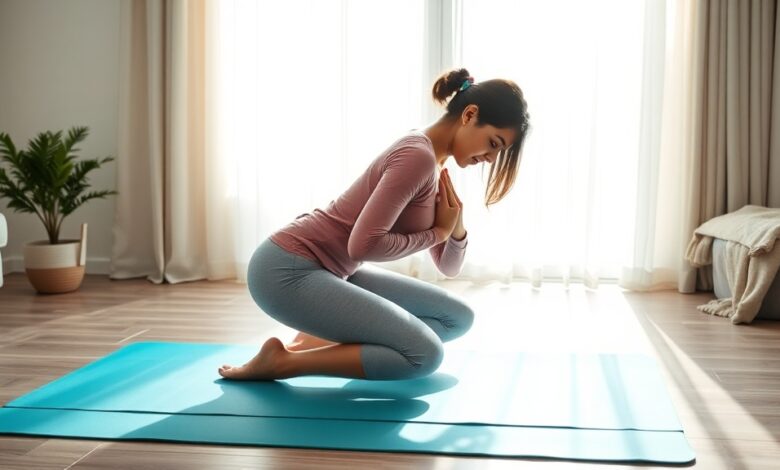
Child’s Pose is one of the most grounding yoga for anxiety poses available. It gently stretches the lower back, hips, and thighs while creating a sense of safety and inward focus. The forehead resting on the mat has a naturally soothing effect.
How to practice:
- Kneel on your mat with big toes touching and knees hip-width apart or wider.
- Sit back toward your heels and fold forward, extending your arms ahead or resting them alongside your body.
- Rest your forehead on the mat or a folded blanket.
- Breathe slowly and deeply for 1 to 3 minutes.
If your hips don’t reach your heels, place a cushion between your thighs and calves for support.
2. Cat-Cow Stretch (Marjaryasana-Bitilasana)
This gentle flowing movement releases tension along the entire spine while synchronizing breath with motion—a combination that quickly calms a racing mind. It’s especially helpful first thing in the morning or during a stressful workday.
How to practice:
- Start on hands and knees with wrists under shoulders and knees under hips.
- Inhale, drop your belly, lift your chest and tailbone, and gaze slightly upward (Cow).
- Exhale, round your spine toward the ceiling, tuck your chin, and draw your navel in (Cat).
- Move slowly between these two positions for 1 to 2 minutes, letting your breath lead.
3. Legs-Up-the-Wall Pose (Viparita Karani)
This restorative pose is among the most effective yoga for anxiety poses for evening use. It requires no muscular effort, gently inverts the body to promote circulation, and triggers the relaxation response almost immediately.
How to practice:
- Sit sideways next to a wall with one hip touching it.
- Swing your legs up the wall as you lower your back to the floor.
- Rest your arms comfortably at your sides, palms facing up.
- Stay for 5 to 10 minutes, breathing naturally.
For added comfort, place a folded blanket under your hips or a small pillow under your head. Many people find this pose particularly helpful before bedtime, and pairing it with healthy sleep routines—like those described in How a Bedtime Alarm Habit Can Improve Sleep Consistency Naturally—can further enhance its benefits.
4. Standing Forward Bend (Uttanasana)
Forward folds naturally encourage the nervous system to downshift. Letting your head hang heavy releases tension in the neck and shoulders—two areas where anxiety often accumulates.
How to practice:
- Stand with feet hip-width apart and knees slightly bent.
- Hinge at your hips and fold forward, letting your arms and head dangle.
- Grasp opposite elbows if that feels comfortable.
- Hold for 30 seconds to 1 minute, taking slow, unhurried breaths.
Come up slowly to avoid dizziness. Bend your knees generously if your hamstrings feel tight.
5. Bridge Pose (Setu Bandhasana)
Bridge Pose opens the chest and shoulders while gently strengthening the back body. This expansion across the front of the body can feel liberating when anxiety makes you want to curl inward.
How to practice:
- Lie on your back with knees bent and feet flat on the floor, hip-width apart.
- Press through your feet and lift your hips toward the ceiling.
- Interlace your fingers beneath your back if accessible, or keep arms flat.
- Hold for 20 to 30 seconds, breathing steadily, then release slowly.
6. Seated Forward Fold (Paschimottanasana)
This pose encourages introspection and stillness. Folding inward creates a quiet, sheltered space that many practitioners find deeply reassuring during anxious moments.
How to practice:
- Sit with legs extended straight ahead.
- Inhale to lengthen your spine, then exhale as you fold forward from the hips.
- Rest your hands on your shins, ankles, or feet—wherever they land comfortably.
- Hold for 1 to 2 minutes, focusing on long, steady exhales.
Avoid forcing the stretch. The goal is relaxation, not reaching your toes.
7. Butterfly Pose (Baddha Konasana)
Butterfly Pose releases tension stored in the hips and inner thighs—areas that often tighten in response to stress. The open-knee position also encourages a sense of receptivity and ease.
How to practice:
- Sit on the floor with the soles of your feet pressed together.
- Let your knees fall outward comfortably.
- Sit tall, holding your feet or ankles.
- Breathe deeply for 2 to 3 minutes. If it feels right, gently fold forward.
8. Easy Pose with Extended Exhale Breathing (Sukhasana)
Sometimes the most powerful yoga for anxiety poses are the simplest ones. Sitting quietly with intentional breathing can be more calming than a full sequence of advanced postures.
How to practice:
- Sit comfortably on a cushion or folded blanket with legs crossed.
- Rest your hands on your knees or in your lap.
- Inhale through your nose for a count of 4.
- Exhale slowly through your nose for a count of 6 or 8.
- Continue for 3 to 5 minutes.
Lengthening the exhale relative to the inhale is one of the fastest ways to activate the parasympathetic nervous system.
9. Corpse Pose (Savasana)
Don’t let its simplicity fool you. Corpse Pose is often called the most difficult yoga posture—not because of physical demand, but because it asks you to remain still and present without distraction. For an anxious mind, this can be challenging and deeply rewarding.
How to practice:
- Lie flat on your back with arms slightly away from your body, palms facing up.
- Let your feet fall open naturally.
- Close your eyes and systematically scan your body from head to toe, releasing tension as you go.
- Stay for 5 to 10 minutes.
This pose allows your nervous system to integrate the calming effects of your practice.
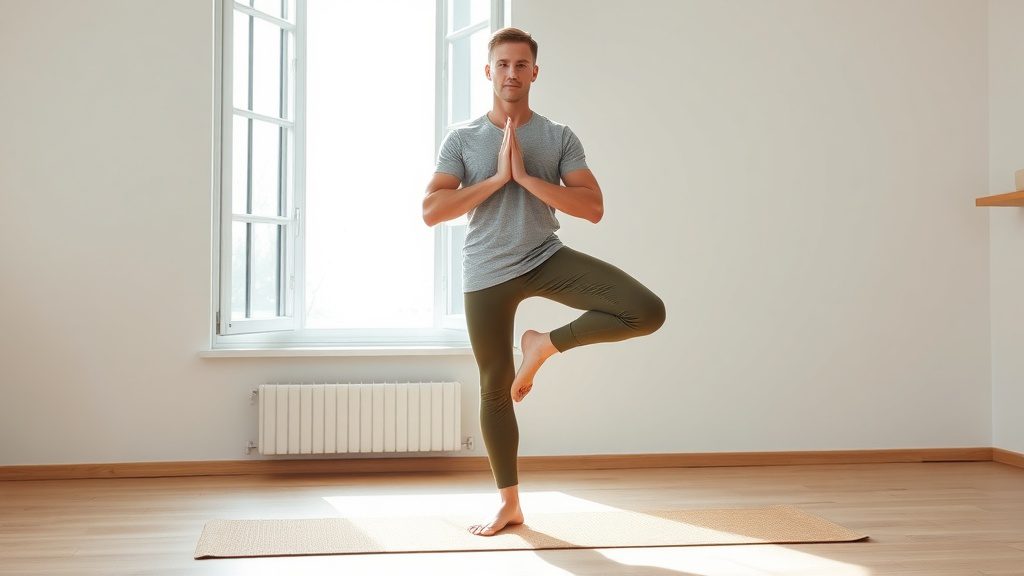
10. Tree Pose (Vrikshasana)
Anxiety scatters attention. Tree Pose gathers it back. Balancing on one foot requires focused concentration, which naturally disrupts anxious thought loops and anchors you in the present.
How to practice:
- Stand tall with your weight evenly distributed.
- Place the sole of your right foot against your left inner thigh or calf—avoid the knee joint.
- Bring your palms together at your chest or raise them overhead.
- Fix your gaze on a stationary point and breathe steadily for 30 seconds to 1 minute per side.
Stand near a wall if balance feels uncertain.
11. Supine Twist (Supta Matsyendrasana)
Twisting poses wring out tension from the spine, hips, and lower back. The Supine Twist feels especially restorative after a long day and can help transition your body toward sleep.
How to practice:
- Lie on your back and hug your right knee into your chest.
- Guide the knee across your body toward the left side, extending your right arm out.
- Turn your gaze toward your right hand if comfortable for your neck.
- Hold for 1 to 2 minutes, then switch sides.
Benefits of a Regular Yoga for Anxiety Practice
Beyond immediate relief, consistent practice of yoga for anxiety poses produces cumulative benefits. What starts as a coping tool can evolve into a foundation of emotional resilience.
- Reduced baseline stress: Regular practitioners often report feeling less reactive to everyday stressors over time.
- Improved interoception: Yoga trains you to notice subtle body signals—like shallow breathing or tight shoulders—before they escalate into full-blown anxiety.
- Better sleep architecture: Evening yoga has been associated with faster sleep onset and fewer nighttime awakenings.
- Enhanced self-efficacy: The simple act of showing up for yourself on the mat reinforces a sense of agency and self-compassion.
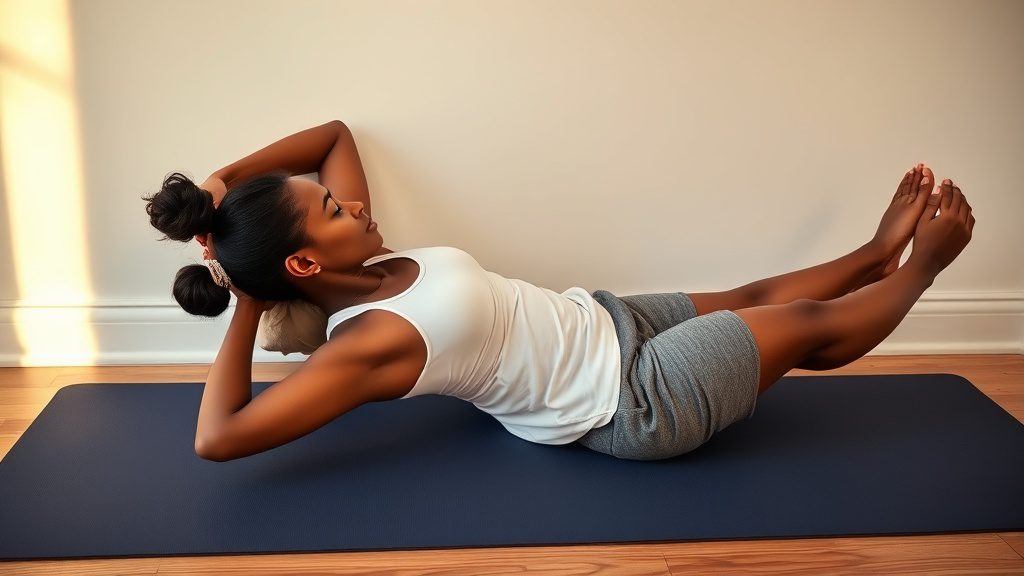
- Greater emotional range: Yoga encourages you to sit with discomfort without fleeing from it, a skill that transfers directly to managing anxiety off the mat.
Breathing Techniques That Enhance Yoga for Anxiety
Breathwork—known as pranayama in the yoga tradition—amplifies the calming effects of physical postures. You can use these techniques alongside poses or on their own during stressful moments.
Box Breathing (Sama Vritti)
Box breathing is a simple, portable technique used by first responders and military personnel to stay calm under pressure. Its structured rhythm gives an anxious mind something steady to hold onto.
How to practice:
- Inhale through your nose for 4 counts.
- Hold your breath gently for 4 counts.
- Exhale through your nose for 4 counts.
- Hold empty for 4 counts.
- Repeat for 5 to 10 rounds.
Alternate Nostril Breathing (Nadi Shodhana)
This traditional practice is believed to balance the left and right hemispheres of the brain, promoting emotional equilibrium. Many practitioners report feeling noticeably calmer after just a few rounds.
How to practice:
- Bring your right hand to your nose and gently close your right nostril with your thumb.
- Inhale slowly through your left nostril.
- Close your left nostril with your ring finger and release your right nostril.
- Exhale slowly through the right nostril.
- Inhale through the right nostril, then switch and exhale through the left.
- Continue this alternating pattern for 3 to 5 minutes.
A Simple 15-Minute Yoga for Anxiety Routine
You don’t need hour-long sessions or advanced flexibility to benefit from yoga for anxiety poses. A short, consistent practice often outperforms sporadic long sessions—because the nervous system learns through repetition, not intensity.
Here’s a practical 15-minute sequence you can use any time of day:
- Child’s Pose — 2 minutes
- Cat-Cow Stretch — 2 minutes
- Standing Forward Bend — 1 minute
- Butterfly Pose — 2 minutes
- Legs-Up-the-Wall Pose — 5 minutes
- Easy Pose with Extended Exhale Breathing — 3 minutes
This flow works well first thing in the morning, during a lunch break, or as an evening wind-down. The key is showing up consistently—even on days when you don’t feel particularly anxious.
Tips to Build a Lasting Yoga Habit
Building consistency matters more than perfect form. Here’s how to make yoga for anxiety poses a sustainable part of your life:
Start Smaller Than You Think Necessary
Five minutes is enough. Reducing the barrier to entry makes it far more likely you’ll actually practice. You can always extend the session once you’re on the mat.
Designate a Calm Space
Pick a quiet corner of your home and keep a mat or blanket there. A dedicated space—even a small one—creates a visual cue that supports habit formation.
Release the Flexibility Myth
Yoga is not about touching your toes or performing impressive shapes. It’s about connecting with your body and breath exactly as they are today. Props, modifications, and bent knees are signs of a wise practice, not a weak one.
Practice Without Judgment
Some days your mind will still race. You’ll check your phone. You’ll feel restless. That’s normal and does not mean you’re doing it wrong. The practice is in returning your attention—again and again—without self-criticism.
Combine Yoga with Complementary Habits
Yoga works even better when supported by broader lifestyle choices. Regular physical activity, balanced nutrition, and practical stress management techniques—like those outlined in 5 Effective Daily Ways to Reduce Stress and Improve Your Mental Health—all reinforce the same nervous system shifts that yoga initiates.
Common Mistakes Beginners Make with Yoga for Anxiety Poses
Starting yoga is simple, but a few common missteps can make the experience less helpful than it could be.
Chasing Advanced Poses Too Early
The most calming yoga for anxiety poses are often the simplest ones. You don’t need headstands or arm balances to calm your nervous system. Child’s Pose, done with full attention and slow breathing, can be more therapeutic than any advanced posture performed with strain.
Holding Your Breath
When concentrating on a new pose, it’s easy to unconsciously hold your breath. But breath-holding can increase tension and trigger the stress response—the opposite of what you want. Keep breathing slow and continuous throughout every pose.
Comparing Your Practice to Others
Your yoga practice is personal. Comparing your body, flexibility, or progress to someone else—in a class or online—undermines the very self-compassion that makes yoga healing for anxiety.
Expecting Overnight Transformation
Yoga for anxiety poses work cumulatively. The nervous system adapts gradually. Expecting immediate, dramatic results often leads to frustration and quitting. Trust the process and measure progress in weeks and months, not individual sessions.
When Yoga Alone Isn’t Enough
Yoga is a powerful supportive tool, but it’s important to recognize its limits. It is not a replacement for professional mental health care when anxiety becomes severe or debilitating.
Consider speaking with a healthcare provider if:
- Anxiety interferes with your ability to work, maintain relationships, or perform daily tasks.
- You experience frequent panic attacks.
- Anxiety persists for weeks or months without relief.
- You feel hopeless, persistently sad, or disconnected from life.
Yoga works best as one component of a comprehensive wellness approach that may include therapy, medication when appropriate, adequate sleep, regular physical activity, and strong social support. The Cleveland Clinic and other major health organizations recognize yoga as a beneficial complementary practice—not a standalone treatment—for anxiety disorders.
Yoga for Anxiety During Stressful Moments
You don’t always need a full sequence. When anxiety spikes unexpectedly—during a workday, in traffic, or before a difficult conversation—try this micro-practice:
- Sit or stand comfortably wherever you are.
- Soften your shoulders away from your ears.
- Take 5 slow, deliberate breaths with extended exhales.
- If possible, fold gently forward for 30 seconds.
This tiny reset can interrupt spiraling thoughts and give your nervous system a brief but meaningful reprieve. Over time, these small interventions accumulate, training your body to access calm more readily.
| Pose | Best For | Approximate Time | Difficulty |
|---|---|---|---|
| Child’s Pose | Grounding, safety, deep breathing | 1–3 minutes | Beginner |
| Cat-Cow Stretch | Spinal tension, breath coordination | 1–2 minutes | Beginner |
| Legs-Up-the-Wall | Evening relaxation, circulation | 5–10 minutes | Beginner |
| Standing Forward Bend | Neck and shoulder release | 30 sec–1 min | Beginner |
| Bridge Pose | Chest opening, back tension | 20–30 seconds | Beginner |
| Seated Forward Fold | Introspection, stillness | 1–2 minutes | Beginner |
| Butterfly Pose | Hip release, receptive calm | 2–3 minutes | Beginner |
| Easy Pose with Breathing | Mindfulness, nervous system reset | 3–5 minutes | Beginner |
| Corpse Pose | Integration, full-body relaxation | 5–10 minutes | Beginner |
| Tree Pose | Focus, mental stability | 30 sec–1 min per side | Beginner |
| Supine Twist | Spinal release, evening wind-down | 1–2 minutes per side | Beginner |
Anxiety doesn’t need to dominate your days. The practice of yoga for anxiety poses offers something rare in modern life: permission to slow down, tune inward, and simply breathe. You don’t need to be flexible, experienced, or perfectly calm to begin. You just need a few minutes and a willingness to meet yourself where you are.
Start with one or two poses that resonate with you. Practice them consistently—not perfectly. Over time, you may notice that the calm you cultivate on the mat begins to follow you into the rest of your life, one breath at a time.
Frequently Asked Questions
Which yoga pose is best for immediate anxiety relief?
Child’s Pose and Legs-Up-the-Wall are widely considered the most immediately calming yoga for anxiety poses. Both require minimal effort, encourage deep breathing, and activate the parasympathetic nervous system within minutes. They are safe for beginners and can be practiced almost anywhere.
How often should I practice yoga for anxiety to see results?
Most people notice improvements with 10 to 15 minutes of daily practice. Consistency is more important than duration—practicing briefly every day tends to produce better nervous system regulation than one long session per week. Benefits typically accumulate over several weeks.
Can yoga for anxiety poses help with panic attacks?
Yoga can help manage general anxiety and may reduce the frequency of panic attacks over time. However, during an active panic attack, gentle breathing exercises—such as extended exhales—are often more accessible than physical poses. Always work with a healthcare provider for panic disorder.
This article is for educational purposes only and does not replace professional medical advice. Always consult a qualified healthcare professional regarding your health concerns.