Check your BMI, Daily Calories, BMR & Body Fat in seconds.
What Are Healthy Protein Snacks?
Snacking often gets a bad reputation, but the problem isn’t snacking itself—it’s what most people reach for. Chips, sugary granola bars, and processed crackers spike your blood sugar and leave you hungry an hour later. Healthy protein snacks flip that pattern entirely. These are snacks built around high-quality protein sources—think Greek yogurt, eggs, edamame, cottage cheese, nuts, seeds, and lean meats—that deliver lasting satiety and steady energy.
What sets them apart from conventional snacks is their macronutrient profile. A truly balanced protein snack typically provides at least 7 to 10 grams of protein per serving while keeping added sugars low and including some fiber or healthy fat. The goal is not just to fill your stomach but to nourish your muscles, stabilize your blood glucose, and keep cravings at bay until your next meal.
Whether you are an athlete looking to support muscle recovery, a busy professional trying to avoid the 3 p.m. energy crash, or someone managing type 2 diabetes who needs blood-sugar-friendly options, healthy protein snacks fit nearly every lifestyle. The key is knowing which options deliver genuine nutritional value and which ones are just junk food wearing a protein label.
Key Takeaways
- Healthy protein snacks provide at least 7–10 grams of protein per serving and prioritize whole-food ingredients over processed fillers.
- Pairing protein with fiber or healthy fats extends satiety and helps regulate blood sugar more effectively than protein alone.
- Whole-food options—such as hard-boiled eggs, Greek yogurt, and edamame—consistently outperform processed protein bars in nutrient density.
- Reading ingredient labels is essential; many products marketed as “high protein” contain added sugars, artificial sweeteners, and inflammatory seed oils.
- Timing your protein snacks strategically—such as mid-afternoon or post-workout—maximizes their metabolic and performance benefits.
Quick Answer: What Should You Look For in Healthy Protein Snacks?
Healthy protein snacks are nutrient-dense mini-meals that deliver at least 7–10 grams of high-quality protein, minimal added sugar (ideally under 5 grams), and recognizable whole-food ingredients. The best options combine protein with fiber or healthy fats to promote satiety, stabilize blood glucose, and support muscle maintenance—all without the artificial additives found in many processed snack foods.
Top 15 High Protein Snacks to Keep You Full and Energized
The following list includes both whole-food staples and a few convenient packaged options that meet rigorous nutritional standards. Every snack here delivers meaningful protein, keeps added sugar low, and fits into a balanced eating pattern. Use this as your go-to reference when hunger strikes.
Dairy-Based Protein Snacks
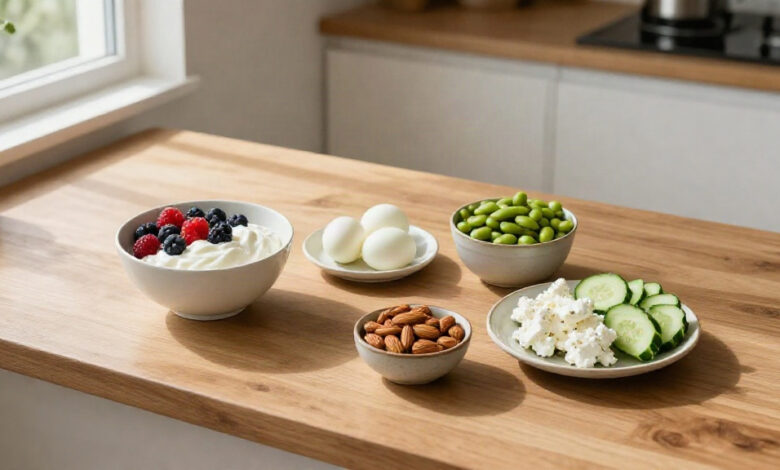
1. Greek Yogurt with Berries and Hemp Seeds. A single 6-ounce serving of plain Greek yogurt provides around 15–18 grams of protein. Top it with a handful of antioxidant-rich berries and a tablespoon of hemp seeds for an extra 3 grams of protein plus omega-3 fatty acids. Skip flavored varieties, which often pack 15–20 grams of added sugar.
2. Cottage Cheese with Cucumber and Black Pepper. Half a cup of low-fat cottage cheese delivers approximately 14 grams of casein protein, which digests slowly and promotes prolonged satiety. Add sliced cucumber for crunch and a crack of black pepper for flavor without extra sodium.
3. String Cheese or Mozzarella Sticks. One part-skim mozzarella stick offers 7 grams of protein in a portable, portion-controlled format. Pair it with a small apple or a few whole-grain crackers for a more complete snack.
Plant-Based Protein Snacks
4. Edamame with Sea Salt. One cup of shelled edamame provides an impressive 18 grams of complete plant protein, making it one of the most nutrient-dense healthy protein snacks available. Keep a bag of frozen edamame in your freezer and steam a portion in under five minutes.
5. Roasted Chickpeas. When tossed with olive oil and your favorite spices then roasted until crispy, chickpeas transform into a crunchy, high-fiber snack delivering about 7 grams of protein per half-cup. They also provide resistant starch, which supports gut health.
6. Almond Butter on Celery Sticks. Two tablespoons of almond butter supply roughly 7 grams of protein along with vitamin E and magnesium. Celery adds satisfying crunch and negligible calories, making this an excellent low carb snack option.
7. Chia Seed Pudding. Combine 2 tablespoons of chia seeds with half a cup of unsweetened almond milk and let it sit overnight. The result is a creamy, fiber-rich snack with 5 grams of protein and a generous dose of omega-3 fatty acids.
Meat, Seafood, and Egg-Based Protein Snacks
8. Hard-Boiled Eggs. One large egg contains 6 grams of complete protein plus choline, which supports brain health. Prepare a batch at the start of the week and keep them refrigerated for a grab-and-go option that stays fresh for up to seven days.
9. Turkey or Beef Jerky. Look for brands that use minimal ingredients—ideally just meat, salt, and spices—and contain no added nitrates or corn syrup. A one-ounce serving typically provides 9–12 grams of protein. If you want to explore options, you can find clean-label grass-fed beef jerky with no added sugar that fits the bill perfectly.
10. Tuna or Salmon Pouches. A single 2.6-ounce pouch of wild-caught tuna delivers around 15–17 grams of protein with zero preparation. Choose varieties packed in water rather than oil to keep saturated fat in check, and pair with whole-grain crackers for a satisfying crunch.
On-the-Go Packaged Protein Snacks
11. Clean-Label Protein Bars. Not all protein bars are created equal. Look for options with at least 10 grams of protein, fewer than 5 grams of added sugar, and a short ingredient list free of sugar alcohols that can cause digestive distress. Bars made with whey or pea protein and sweetened with dates or monk fruit tend to be better choices.
12. Dry-Roasted Nuts and Seeds. A quarter-cup of almonds provides 7 grams of protein, while pumpkin seeds deliver 9 grams per quarter-cup. Choose dry-roasted or raw varieties over those roasted in inflammatory vegetable oils. Portion them into small reusable containers to avoid mindless overeating.
13. Protein Smoothies. Blend one scoop of unsweetened protein powder with unsweetened almond milk, a handful of spinach, and a tablespoon of flaxseed. This creates a portable healthy protein snack in under two minutes. For a high-quality option, consider unsweetened whey protein powder with clean ingredients that avoids artificial sweeteners and fillers.
14. Roasted Fava Beans or Lentil Snacks. These crunchy, shelf-stable legumes supply around 8 grams of protein per serving along with gut-friendly fiber. They are an excellent alternative to chips when you crave something crispy and salty.
15. Nut and Seed Trail Mix. Build your own mix using almonds, walnuts, pumpkin seeds, and unsweetened coconut flakes. Skip dried fruit, which concentrates sugar and adds unnecessary carbohydrates. A quarter-cup serving provides roughly 6–8 grams of protein.
Benefits of Healthy Protein Snacks
Incorporating healthy protein snacks into your daily routine goes far beyond simply taming hunger. The physiological benefits of adequate protein spacing throughout the day are well-documented in nutritional science, and they affect everything from your metabolic rate to your cognitive performance.
Enhanced Satiety and Reduced Cravings
Protein is the most satiating macronutrient. It triggers the release of peptide YY and GLP-1—hormones that signal fullness to your brain—while simultaneously suppressing ghrelin, the hormone responsible for hunger. When you choose high protein snacks instead of carbohydrate-heavy alternatives, you naturally eat fewer calories at your next meal without feeling deprived. This is not about willpower; it is about biochemistry.
Blood Sugar Stability
Snacks built around refined carbohydrates—pretzels, crackers, cereal bars—cause rapid blood glucose spikes followed by crashes that trigger more cravings. Protein slows the absorption of glucose into your bloodstream, flattening the glycemic curve. For individuals managing prediabetes or type 2 diabetes, this effect is particularly meaningful. Pairing protein with fiber-rich vegetables or nuts amplifies this benefit.
Muscle Maintenance and Recovery
Your body constantly breaks down and rebuilds muscle tissue through a process called protein turnover. Spreading protein intake across the day—rather than consuming most of it at dinner—optimizes muscle protein synthesis. A well-timed healthy protein snack after a workout provides the amino acids your muscles need to repair and grow stronger.
Metabolic Support
Protein has a higher thermic effect of food than carbohydrates or fats, meaning your body burns more calories digesting and metabolizing it. Roughly 20–30% of the calories from protein are used in the digestion process alone. While this isn’t a magic weight loss solution, it contributes to the overall metabolic advantage of a protein-rich eating pattern.
Cognitive Performance and Mood
The amino acid tyrosine, found abundantly in protein-rich foods, serves as a precursor to dopamine and norepinephrine—neurotransmitters that influence focus, alertness, and motivation. A mid-afternoon healthy protein snack can help you power through the last hours of your workday more effectively than a sugary pick-me-up that leads to a crash.

Potential Risks or Considerations
While healthy protein snacks offer considerable benefits, there are nuances worth understanding. Overconsumption, poor sourcing, and relying too heavily on processed options can undermine the advantages.
Important: If you have kidney disease, consult your healthcare provider before significantly increasing protein intake. Healthy kidneys handle higher protein loads without issue, but compromised kidney function requires careful protein monitoring.
Excess Protein and Caloric Balance
More protein is not always better. Once your body meets its amino acid needs, excess protein is either excreted or stored as fat. Adding multiple high-calorie protein snacks to an already adequate diet can lead to unintended weight gain. The goal is strategic protein spacing, not protein overloading.
Hidden Ingredients in Packaged Protein Snacks
Many products labeled as high protein snacks contain troubling ingredients. Sugar alcohols like maltitol and sorbitol can cause bloating and digestive discomfort. Inflammatory seed oils, artificial flavors, and carrageenan appear frequently in protein bars and shakes. Always read the ingredient panel—not just the nutrition facts—before buying.
Digestive Sensitivities
Dairy-based protein snacks can trigger bloating or discomfort in people with lactose intolerance. Whey protein concentrate, in particular, retains more lactose than whey isolate. Plant-based proteins like pea or hemp offer alternatives, though some individuals may need time to adjust to the higher fiber content of legume-based snacks.
Sodium in Savory Protein Snacks
Jerky, deli meats, and flavored nuts can pack surprising amounts of sodium. Regularly exceeding 2,300 milligrams per day raises blood pressure risk. Choose low-sodium or unsalted versions whenever possible, and balance salty protein snacks with potassium-rich foods like spinach or avocado later in the day.
Healthy Protein Snacks for Weight Management
If your goal is fat loss or weight maintenance, healthy protein snacks are among the most effective tools in your nutritional toolkit—provided you use them strategically. Research consistently shows that higher-protein eating patterns support better body composition outcomes than low-protein diets at the same calorie level.
The mechanism is multifactorial: protein preserves lean muscle mass during a calorie deficit, increases dietary thermogenesis, and reduces the hunger that typically derails weight loss efforts. A 2020 review published in the Journal of Obesity & Metabolic Syndrome confirmed that protein intakes between 1.2 and 1.6 grams per kilogram of body weight significantly improved weight loss outcomes compared to standard protein recommendations.
For practical application, aim to include a protein source in every eating occasion, including snacks. A mid-morning Greek yogurt or an afternoon hard-boiled egg can prevent the ravenous hunger that leads to overeating at dinner. These small, consistent choices compound over time. As noted in our guide on microhabits for weight loss, sustainable change rarely comes from dramatic overhauls—it comes from small, repeatable actions that align with your goals.
| Snack Type | Protein (g) | Calories | Best For |
|---|---|---|---|
| Greek Yogurt (6 oz, plain) | 15–18 | 100–130 | Satiety, gut health |
| Hard-Boiled Egg (1 large) | 6 | 70 | Portability, brain health |
| Edamame (1 cup, shelled) | 18 | 190 | Plant-based, fiber |
| Cottage Cheese (½ cup, low-fat) | 14 | 90 | Slow-digesting casein |
| Almonds (¼ cup) | 7 | 210 | Healthy fats, vitamin E |
| Protein Bar (clean label) | 10–20 | 180–250 | Convenience |
| Tuna Pouch (2.6 oz) | 15–17 | 90–110 | Lean protein, omega-3s |
How to Choose the Best Healthy Protein Snacks
Walking down the snack aisle can feel overwhelming. Brands invest heavily in marketing terms like “natural,” “high-protein,” and “fit”—none of which are regulated or meaningful. Here is a practical framework for cutting through the noise and selecting genuinely nutritious healthy protein snacks.
The 3-Question Filter
Ask yourself these three questions before buying any packaged protein snack:
- Does it provide at least 7 grams of protein per serving? If not, it is unlikely to meaningfully affect satiety or muscle protein synthesis.
- Is added sugar under 5 grams per serving? Many “protein” products are simply candy bars with a few grams of protein isolate added. Check the ingredient list for sugar, corn syrup, honey, agave, and other aliases.
- Can I recognize and pronounce every ingredient? If the list reads like a chemistry textbook, put it back. Whole-food-based snacks are almost always the better choice.
Whole Foods First, Packaged Second
The hierarchy of healthy protein snacks is straightforward: whole foods occupy the top tier, minimally processed options come next, and highly processed protein products should be occasional conveniences rather than daily staples. A hard-boiled egg will always outperform a protein cookie, regardless of how the cookie is marketed. Building your snacking habits around this principle, alongside broader healthy eating habits, creates a sustainable nutritional foundation that no packaged product can replicate.
Practical Tips for Incorporating Healthy Protein Snacks
Knowing which healthy protein snacks to choose is only half the equation. The other half is integrating them seamlessly into your daily routine so they become automatic rather than aspirational. These practical strategies close that gap.
Batch Prep Once, Eat All Week
Dedicate 30 minutes on Sunday to preparing your protein snacks for the week ahead. Boil a dozen eggs, portion nuts into small containers, wash and chop vegetables, and mix a batch of chia pudding. When hunger strikes on a busy Wednesday afternoon, you will reach for what is available—so make sure what is available is nutritious.
Use the Protein-First Rule
Before eating any snack, ask yourself: where is the protein source? If the answer is unclear, consider adding one. An apple becomes a balanced snack when paired with almond butter. Whole-grain crackers improve when topped with cottage cheese. This simple mental habit transforms nutritionally incomplete snacks into satisfying mini-meals.
Keep a Desk or Car Stash
Stock your desk drawer, car glove compartment, or bag with shelf-stable healthy protein snacks such as individual nut packs, clean jerky, or single-serve protein powder sachets. This environmental design strategy removes friction and reduces the likelihood of hitting a vending machine or drive-through when hunger catches you off guard.
Time Your Snacks Strategically
The most impactful windows for protein snacking are mid-afternoon—when energy and focus typically dip—and within 60 minutes after exercise, when muscles are primed to absorb amino acids. A protein-rich snack between 3 p.m. and 4 p.m. can also curb the tendency to overeat at dinner.
Common Mistakes When Choosing Protein Snacks
Even health-conscious consumers fall into traps when selecting protein foods for snacking. Recognizing these common missteps helps you avoid them.
Mistake 1: Trusting Front-Label Marketing
“Made with real protein” and “high in protein” are marketing phrases, not nutritional guarantees. A product boasting 10 grams of protein might also deliver 18 grams of added sugar and a long list of preservatives. Always verify claims by reading the nutrition facts panel and ingredient list on the back.
Mistake 2: Ignoring Portion Sizes
Nuts, trail mixes, and even Greek yogurt can become caloric pitfalls when portions go unchecked. A single “handful” of almonds can range from 150 to 400 calories depending on hand size and generosity. Use measuring cups or a food scale until you develop an accurate eye for portions.
Mistake 3: Assuming All Protein Bars Are Equal
The difference between a high-quality protein bar and a glorified candy bar is vast. Some bars use protein isolate and natural sweeteners; others rely on soy protein concentrate, fractionated palm oil, and corn syrup. If the bar’s ingredient list resembles that of a chocolate bar, treat it as dessert—not as a healthy protein snack.
Mistake 4: Neglecting Fiber and Fat
Protein alone cannot sustain satiety indefinitely. The most effective protein snacks include fiber, healthy fat, or both. An isolated protein shake digests quickly and may leave you hungry sooner than a snack that combines protein with fiber-rich vegetables or fat from nuts and seeds.
Evidence-Based Recommendations
Drawing from current nutritional research and clinical guidelines, here are the evidence-backed recommendations for making healthy protein snacks a consistent and beneficial part of your eating pattern.
Aim for 20–30 grams of protein per eating occasion, including snacks. Research on muscle protein synthesis suggests that distributing protein evenly across meals and snacks—rather than skewing intake toward dinner—maximizes the body’s ability to use amino acids for repair and maintenance. A snack providing 10–20 grams of protein helps bridge the gap between meals.
Prioritize complete proteins. Animal-based foods such as eggs, dairy, meat, and fish provide all nine essential amino acids in adequate amounts. For plant-based eaters, combining complementary sources—such as legumes with nuts or seeds—ensures a complete amino acid profile. Soy products like edamame and tofu are complete plant proteins and require no combining.
Match your snack to your health context. Individuals managing diabetes should emphasize low carb snacks that combine protein with fiber and minimize added sugar. Those focused on athletic performance may benefit from slightly higher protein intakes timed around training sessions. Our guide on the best foods for diabetics provides additional context for blood-sugar-friendly eating patterns that apply to snacking as well.
Stay hydrated. Higher protein intake increases the body’s need for water to metabolize nitrogen from amino acids. Drinking adequate fluids throughout the day supports kidney function and helps prevent the mild dehydration that can sometimes accompany a higher-protein diet.
At-a-Glance Summary
| Category | Recommendation |
|---|---|
| Protein per snack | 7–20 grams from whole-food sources when possible |
| Added sugar limit | Under 5 grams per serving |
| Best whole-food picks | Greek yogurt, hard-boiled eggs, edamame, cottage cheese, nuts |
| Convenience options | Clean-label jerky, tuna pouches, minimally processed protein bars |
| Snacking frequency | 1–2 protein-rich snacks per day, timed between meals or post-workout |
| Key pitfall to avoid | Products with high added sugar disguised as protein snacks |
| Special consideration | Kidney conditions require medical guidance before increasing protein |
Building a snacking routine around healthy protein snacks is one of the most straightforward and impactful changes you can make to your nutrition. It requires no extreme restrictions, no expensive supplements, and no complicated meal plans—just a shift toward whole-food protein sources and a bit of weekly preparation. The result is steadier energy, fewer cravings, better muscle health, and a more balanced relationship with food overall.
Start small. Replace one processed snack this week with a hard-boiled egg, a cup of edamame, or a bowl of Greek yogurt. Pay attention to how your body responds—how long you stay full, how your energy holds up, and whether your cravings shift. Those observations, more than any article, will convince you that healthy protein snacks deserve a permanent place in your daily routine.

Frequently Asked Questions
What are the best healthy protein snacks for weight loss?
The best healthy protein snacks for weight loss are low-calorie, high-protein options like hard-boiled eggs, Greek yogurt, and edamame, which promote satiety without excess calories.
How much protein should a snack contain?
A well-balanced protein snack should deliver at least 7 to 10 grams of protein to meaningfully impact hunger and support muscle maintenance between meals.
Can I eat protein snacks every day?
Yes, eating healthy protein snacks daily is safe and beneficial for most people, provided you choose whole-food sources and stay within your overall calorie and protein needs.
This article is for educational purposes only and does not replace professional medical advice. Always consult a qualified healthcare professional regarding your health concerns.