Check your BMI, Daily Calories, BMR & Body Fat in seconds.
What Are High Protein Snacks and Why Do They Matter?
Finding the right snack can make or break your nutrition goals. High protein snacks offer a practical way to curb hunger, support muscle recovery, and maintain steady energy between meals. Unlike carbohydrate-heavy options that spike blood sugar and leave you craving more, protein-rich choices promote lasting fullness and help you stay on track with your health objectives.
Protein takes longer to digest than carbohydrates, which means it stays in your stomach longer and signals your brain that you are satisfied. This makes protein-focused snacking one of the simplest strategies for managing appetite without complicated meal planning. Whether you are an athlete, a busy professional, or someone working toward weight management, choosing the right snack matters more than most people realize.
Key Takeaways
- High protein snacks promote satiety and delay hunger better than high-carb or high-fat alternatives.
- Aim for snacks with at least 10–20 grams of protein per serving for meaningful appetite control.
- Whole-food options like Greek yogurt, eggs, edamame, and cottage cheese outperform heavily processed protein bars.
- Evidence links protein-rich snacking to improved weight management and better muscle recovery.
- Pairing protein with fiber and healthy fats creates the most filling and nutritious snack combinations.
Quick Answer: Why Choose High Protein Snacks?
High protein snacks help control hunger, support muscle maintenance, and prevent energy crashes between meals. Research shows protein-rich snacks enhance satiety and delay the desire to eat again—sometimes by 30 minutes or more compared to high-fat or high-carb snacks. Greek yogurt, cottage cheese, hard-boiled eggs, nuts, and edamame rank among the most effective and accessible options. For best results, choose snacks delivering at least 10 grams of protein with minimal added sugars.
Science-Backed Benefits of High Protein Snacks
The case for high protein snacks goes far beyond popular diet trends. A growing body of clinical research supports their role in appetite regulation, weight management, and metabolic health. Understanding the science helps you make smarter choices about when and what to snack on.
Enhanced Satiety and Appetite Control
Protein is the most satiating macronutrient. When you eat a protein-rich snack, your body releases appetite-regulating hormones including cholecystokinin (CCK), glucagon-like peptide-1 (GLP-1), and peptide YY (PYY). These hormones signal your brain that you have had enough to eat.
In a randomized crossover study, women who consumed a high-protein Greek yogurt snack experienced reduced hunger, increased fullness, and delayed subsequent food intake compared to those eating high-fat peanut snacks. Another controlled trial found that a less energy-dense, high-protein yogurt improved appetite control and reduced overall food intake relative to energy-dense, high-fat crackers and chocolate after just three days of consistent consumption.
These effects are not trivial. Delaying your next meal by 30 minutes or more can shift your entire eating schedule, reducing total daily calorie intake without requiring willpower or restriction.
Support for Weight Management
Weight management hinges on maintaining a sustainable calorie deficit without triggering excessive hunger. High protein snacks fill this role effectively. Protein-rich formulations, including energy balls and bars delivering over 20 g protein per serving with high fiber and low carbohydrates, may serve as a safe and effective weight-loss strategy for individuals with obesity or overweight. These snacks may also protect against dyslipidemia, diabetes, and other metabolic disorders.
The mechanism is straightforward: when snacks keep you fuller longer, you are less likely to reach for additional calories between meals. Over weeks and months, this behavioral shift translates into meaningful weight loss results.
Muscle Preservation and Recovery
Muscle tissue requires a steady supply of amino acids for maintenance and repair. Spacing protein intake throughout the day—including during snack times—optimizes muscle protein synthesis. This matters whether you are an active individual looking to build strength or someone concerned about age-related muscle loss.
For people engaged in resistance training, consuming protein-rich snacks between meals supplies the building blocks muscles need to recover and grow. Even for sedentary individuals, preventing muscle breakdown during calorie restriction depends partly on adequate protein distribution across all eating occasions.
Blood Sugar Stability
Unlike carbohydrate-dense snacks that cause rapid blood sugar spikes followed by crashes, protein-rich snacks produce a more gradual glycemic response. This steadier blood sugar curve helps prevent the energy slumps and cravings that often derail healthy eating patterns in the mid-afternoon.
The blood-sugar-stabilizing effect of protein makes these snacks particularly valuable for individuals managing insulin sensitivity or anyone who experiences the common 3 p.m. energy dip.

Best Types of High Protein Snacks for Every Lifestyle
Not all high protein snacks are created equal. The best choice depends on your preferences, dietary pattern, and daily routine. Here is a breakdown of top options across different categories.
Animal-Based Protein Snacks
Animal proteins deliver complete amino acid profiles with high bioavailability. These options work well for omnivores seeking maximum protein density per calorie.
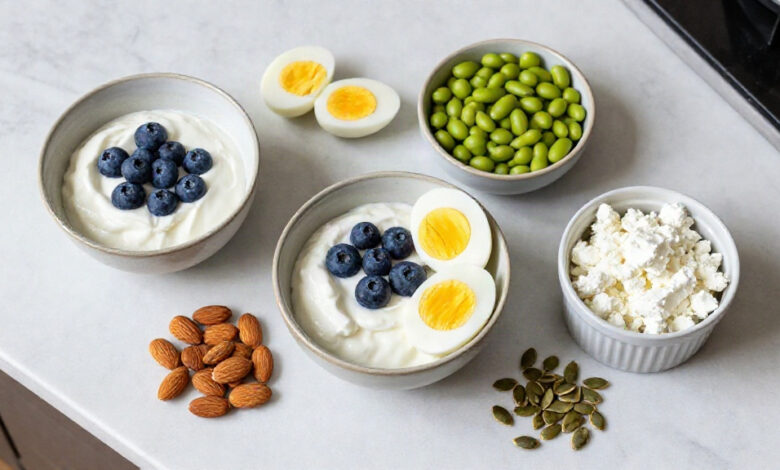
- Greek Yogurt: A single 6-ounce serving provides 15–20 grams of protein. Choose plain varieties to avoid added sugars and top with berries or a drizzle of honey. You can find quality Greek yogurt options at most grocery stores or online.
- Cottage Cheese: A half-cup serving packs about 14 grams of casein protein, which digests slowly and provides sustained amino acid release. Pair with cucumber slices or fresh fruit.
- Hard-Boiled Eggs: Each egg delivers roughly 6 grams of complete protein plus essential vitamins. Prepare a batch at the start of the week for grab-and-go convenience.
- Tuna or Salmon Pouches: A 3-ounce serving provides 20–22 grams of protein with heart-healthy omega-3 fatty acids. Shelf-stable pouches eliminate the need for refrigeration.
- Turkey or Chicken Roll-Ups: Wrap sliced lean poultry around cheese sticks or vegetable spears for a portable, low-carb snack delivering 15–25 grams of protein.
Plant-Based Protein Snacks
Plant-based eaters can meet protein targets with strategic snack choices. Combining complementary plant proteins improves the amino acid profile.
- Edamame: One cup of shelled edamame provides 18 grams of complete soy protein along with fiber and iron. Steam and lightly salt for a satisfying warm snack.
- Roasted Chickpeas: A half-cup serving offers 7–10 grams of protein plus crunch that satisfies snack cravings. Season with smoked paprika or garlic powder.
- Nut Butter Packets: Single-serving almond or peanut butter packets deliver 7–8 grams of protein. Pair with apple slices or celery sticks for added fiber.
- Pumpkin Seeds: A quarter-cup serving provides about 10 grams of protein along with magnesium and zinc. Choose unsalted varieties for everyday consumption.
- Protein-Rich Energy Balls: Homemade versions combining date paste, nuts, and seeds can deliver substantial protein while contributing antioxidant and anti-inflammatory properties from ingredients like dates and almonds.
On-the-Go Convenience Options
Busy schedules demand portable solutions. These high protein snacks require zero preparation and travel well.
- Protein Bars: Look for bars with at least 10 grams of protein, fewer than 8 grams of added sugar, and recognizable whole-food ingredients. Many high-quality high protein snack bars now use whey, casein, or plant protein blends.
- Cheese Sticks: String cheese or mini cheese rounds offer 6–8 grams of protein each. Pair with a small handful of almonds for a balanced mini-meal.
- Jerky or Meat Sticks: Beef, turkey, or salmon jerky delivers concentrated protein with minimal bulk. Check labels for sodium content and choose brands without nitrates when possible.
- Ready-to-Drink Protein Shakes: Shelf-stable shakes provide 20–30 grams of protein in seconds. These work well as a backup option when whole foods are not accessible.
High Protein Snacks for Muscle Gain and Recovery
Athletes and fitness enthusiasts have elevated protein needs. Strategically timed high protein snacks can bridge the gap between meals and optimize the muscle repair process.
Timing Matters
The anabolic window—the period after exercise when muscles are primed to absorb nutrients—lasts several hours, not just 30 minutes. Consuming 20–40 grams of protein within two hours post-workout supports muscle protein synthesis. A well-timed protein snack can serve this purpose without requiring a full meal.
Protein Quality Considerations
Not all protein sources stimulate muscle growth equally. Animal proteins and soy contain all nine essential amino acids in sufficient quantities. Leucine, a branched-chain amino acid, serves as the primary trigger for muscle protein synthesis. Snacks providing 2.5–3 grams of leucine per serving maximize the anabolic response.
| Snack | Protein (g) | Leucine (g) | Calories | Best For |
|---|---|---|---|---|
| Greek Yogurt (1 cup, plain) | 20–23 | 2.0–2.3 | 130–150 | Post-workout recovery |
| Cottage Cheese (1 cup, low-fat) | 24–28 | 2.5–2.9 | 180–200 | Evening snack, slow-release |
| Hard-Boiled Eggs (3 large) | 18 | 1.6 | 210 | Morning or midday |
| Edamame (1 cup, shelled) | 18 | 1.5 | 190 | Plant-based recovery |
| Tuna Pouch (3 oz) | 22 | 2.0 | 110 | Lean protein boost |
| Protein Shake (1 scoop whey) | 24–30 | 2.5–3.3 | 120–150 | Immediate post-workout |
Snacking Strategy for Muscle Goals
Distribute protein intake across three to five eating occasions rather than loading it all into dinner. For someone targeting 150 grams of daily protein, that means roughly 30–50 grams per meal plus one or two snacks contributing 15–25 grams each. High protein snacks make this distribution pattern achievable without constant meal preparation.
Potential Risks or Considerations
While high protein snacks offer clear benefits, a few considerations deserve attention before you overhaul your snacking routine.
Calorie Awareness
Protein-rich does not automatically mean low-calorie. Nuts, nut butters, and many commercial protein bars pack substantial calories alongside their protein content. A single protein bar can exceed 300 calories—equivalent to a small meal. Track portions if weight management is your goal.
Digestive Comfort
Some people experience bloating or digestive discomfort when consuming large amounts of whey protein or protein bars containing sugar alcohols. Introduce new protein snacks gradually and pay attention to how your body responds. Whole-food options like yogurt and eggs tend to be gentler on digestion than heavily processed alternatives.
Sodium Content
Jerky, meat sticks, flavored nuts, and certain cheese snacks can contain surprisingly high sodium levels. Regularly check nutrition labels if you monitor sodium intake for blood pressure management. Unsalted or low-sodium versions of these healthy protein snacks are widely available.
Important: Individuals with kidney conditions should consult their healthcare provider before significantly increasing protein intake. While healthy kidneys handle higher protein loads without issue, compromised kidney function requires personalized guidance. The protein differential needed for meaningful appetite suppression may also be dose-dependent—snacks with only a small protein advantage over alternatives may not produce the expected satiety benefits.
Practical Tips for Choosing High Protein Snacks
Turning knowledge into action requires practical strategies. These tips help you select and prepare high protein snacks that fit seamlessly into your daily life.
Read Labels Strategically
Scan the nutrition facts panel for protein content first, then check added sugars. A quality protein snack should deliver at least 10 grams of protein and fewer than 8 grams of added sugar per serving. The ingredient list should be short and recognizable. If the first three ingredients include syrups, oils, or refined flours, consider a different option.
Prep in Batches
Weekend preparation transforms snack decisions from impulsive to intentional. Hard-boil a dozen eggs, portion Greek yogurt into single-serving containers, wash and bag edamame pods, and assemble homemade energy balls. When high protein snacks are ready to grab, you bypass the vending machine and break room doughnuts without a second thought.
Pair Protein with Fiber
Combining protein and fiber amplifies the satiety effect beyond what either nutrient achieves alone. Apple slices with almond butter, cottage cheese with berries, or edamame with carrot sticks all deliver this synergistic pairing. The fiber slows gastric emptying while protein triggers satiety hormones—a dual mechanism that keeps hunger at bay for hours.
Keep Emergency Options Nearby
Stock your desk drawer, car glove compartment, and gym bag with shelf-stable healthy protein snacks. Single-serving nut packets, quality protein bars, and meat jerky all survive without refrigeration. Having a plan B prevents the hunger-driven decision-making that leads to less nutritious choices.
Rotate Your Selections
Eating the same snack every day leads to boredom and increases the likelihood of abandoning your nutrition plan. Rotate through three to five different protein foods across the week. Monday might feature Greek yogurt, Tuesday brings edamame, Wednesday introduces tuna pouches, and so on. Variety also diversifies your micronutrient intake.
Common Mistakes When Adding High Protein Snacks to Your Diet
Even well-intentioned changes can go sideways. Avoid these frequent missteps when incorporating high protein snacks into your eating pattern.
Mistaking “High Protein” Marketing for Actual Nutrition
Front-of-package claims can mislead. Some products labeled “high in protein” deliver only 5 or 6 grams per serving—barely more than a slice of bread. Always verify the actual protein grams on the nutrition facts panel rather than trusting marketing language. The term “high protein” is not strictly regulated on many snack foods.
Overlooking Total Daily Protein Distribution
Adding protein snacks without adjusting meal portions can push total daily intake beyond what your body needs or your weight goals allow. Snacks for muscle gain work best as part of an intentional daily plan, not as random additions to an already adequate diet. Track your total intake for at least a week to understand how snacks fit into the bigger picture.
Choosing Bars Over Whole Foods Too Often
Protein bars serve a purpose, but relying on them as your primary protein snack source means missing out on the vitamins, minerals, and phytonutrients found in whole foods. Greek yogurt provides calcium and probiotics. Eggs deliver choline and vitamin D. Edamame contributes fiber and iron. A bar cannot replicate this nutritional complexity.
Ignoring the Protein Differential
Research suggests that a meaningful protein advantage matters. When comparing afternoon yogurt snacks, a study found that a small protein differential—5 grams versus 14 grams—did not produce significant differences in appetite control, whereas a larger 20-gram differential demonstrated a clear 30-minute delay in dinner requests. Choose snacks with a substantial protein punch rather than those with just marginally more protein than alternatives.
Evidence-Based Recommendations
Drawing from the available clinical evidence, several clear recommendations emerge for anyone looking to optimize their snacking habits.
- Target 15–25 grams of protein per snack. This range consistently demonstrates measurable effects on satiety and subsequent meal timing in controlled studies.
- Favor whole-food protein sources. Greek yogurt, cottage cheese, eggs, edamame, and lean poultry provide complete nutrition packages that processed bars cannot match.
- Replace high-fat, high-carb snacks with protein alternatives. Swapping afternoon chips or chocolate for a high-protein yogurt yields measurable improvements in appetite regulation within days.
- Use protein snacks strategically between lunch and dinner. The late afternoon represents the highest-risk window for unhealthy snacking, and a well-timed protein snack can prevent impulsive evening overeating.
- Combine protein with fiber-rich foods. The dual satiety mechanism produces stronger and longer-lasting fullness than either nutrient alone.
- Match snack protein quality to your goals. Complete proteins with adequate leucine content matter most for muscle gain. For general appetite control, total protein quantity takes priority over amino acid profile.
Summary Table: High Protein Snacks at a Glance
| Category | Examples | Protein Range | Key Benefit | Watch For |
|---|---|---|---|---|
| Dairy-Based | Greek yogurt, cottage cheese, string cheese | 8–25 g | Complete protein, slow-digesting casein option | Added sugars in flavored varieties |
| Egg-Based | Hard-boiled eggs, egg bites | 6–18 g | Nutrient-dense, portable, affordable | Preparation time if not batch-cooked |
| Meat & Seafood | Jerky, tuna pouches, turkey roll-ups | 15–25 g | Highest protein density per calorie | Sodium in jerky; refrigeration for fresh |
| Plant-Based | Edamame, roasted chickpeas, pumpkin seeds | 7–18 g | Fiber-rich, additional micronutrients | Lower leucine content; combine sources |
| Nuts & Seeds | Almonds, peanuts, nut butter packets | 7–10 g | Healthy fats, highly portable | Calorie density; portion control essential |
| Convenience | Protein bars, ready-to-drink shakes | 10–30 g | Zero preparation, shelf-stable | Added sugars, sugar alcohols, cost |
Building a sustainable snacking pattern does not require perfection. Start by identifying one or two daily snack occasions where you currently reach for low-protein options. Replace those with one of the high protein snacks listed above. After two weeks, reassess how your hunger levels, energy, and cravings have shifted. Most people notice a meaningful difference within the first several days.
The research consistently points in the same direction: protein-rich snacks outperform high-carb and high-fat alternatives for appetite control, and the benefits compound over time. Whether your goal involves weight management, muscle gain, or simply feeling more energized throughout the day, upgrading your snack choices ranks among the highest-impact nutrition changes you can make. For a deeper look at specific snack recommendations, explore our guide on healthy protein snacks with detailed preparation ideas and additional evidence-based picks.

Frequently Asked Questions
What are the best high protein snacks for weight loss?
Greek yogurt, cottage cheese, hard-boiled eggs, and edamame rank among the best high protein snacks for weight loss because they deliver substantial protein with moderate calories and promote lasting fullness between meals.
How many grams of protein should a snack have?
Aim for at least 10–20 grams of protein per snack. Evidence suggests a meaningful protein differential—ideally 15 grams or more—is needed to produce measurable effects on hunger and subsequent meal timing.
Can I eat protein snacks every day?
Yes, daily protein snacking is safe for most people. Rotate between different whole-food options to diversify nutrient intake, and monitor total daily calories if weight management is a primary goal.
This article is for educational purposes only and does not replace professional medical advice. Always consult a qualified healthcare professional regarding your health concerns.